
Tuning into seasonal produce
Apr 27, 2026A slight change in direction for this week as we edge into May.
I thought we would take a look at some seasonal produce you might want to explore for the first time… or perhaps reintroduce to your shopping trolley with a bit more intention.
Because one of the simplest ways to support your health in menopause is not through anything extreme or complicated, but through consistently choosing foods that quietly do a lot of heavy lifting for you.
And this is where seasonal produce can come into its own via prompting heathful additions to the shopping trolley, that improve dietary diversity &, as such, help improve our overall resilience.
So let’s start with something very familiar.
Cucumber.
Yes, the humble cucumber: available all year round, but naturally in season across the British Isles as we move into May.
Now, you might not immediately think of cucumber as particularly “powerful”, but it earns its place in your fridge.
First and foremost, it is incredibly hydrating. It’s almost entirely water, which makes it naturally cooling. That can be particularly helpful if you are someone struggling with temperature regulation or hot flushes.
It also brings potassium to the table, which plays a role in regulating blood pressure, something many of us become more mindful of as we move through our 50s and beyond.
From a gut health perspective, cucumber provides soluble fibre in the form of pectin, helping support regularity and softer stools. And if you’re eating the skin (which I would always recommend if tolerated), you’re also getting insoluble fibre, supporting overall digestive health as it acts as the stiff broom clearing out your innards!
Add to that a range of antioxidant compounds - flavonoids, tannins and lignans - and you’ve got a food that quietly supports inflammation control, immune health and potentially even some menopausal symptoms due to those weakly oestrogenic lignans.
Not bad for something we tend to overlook.
Next on the list, and very much a seasonal favourite, asparagus.
And no, it’s not just about the smelly wee!
Asparagus is actually a direct source of glutathione, often referred to as the body’s master antioxidant. It’s so important that the body devotes nearly 10% of its energy to producing it.
So getting some from your food? A very helpful bonus.
It also contains amino acid asparagine, a natural diuretic, which may support fluid balance -something that can become more noticeable during menopause. Fluid retention anyone??
In terms of nutrients, asparagus delivers blood pressure regulating magnesium, calcium and potassium, alongside vitamins A, C and folate. It’s also a fibre-rich – one of the ‘special’ prebiotic foods, meaning it provides especial support for a healthy gut microbiome.
And as we know, gut health has far-reaching effects: from digestion to immunity to mood and beyond.
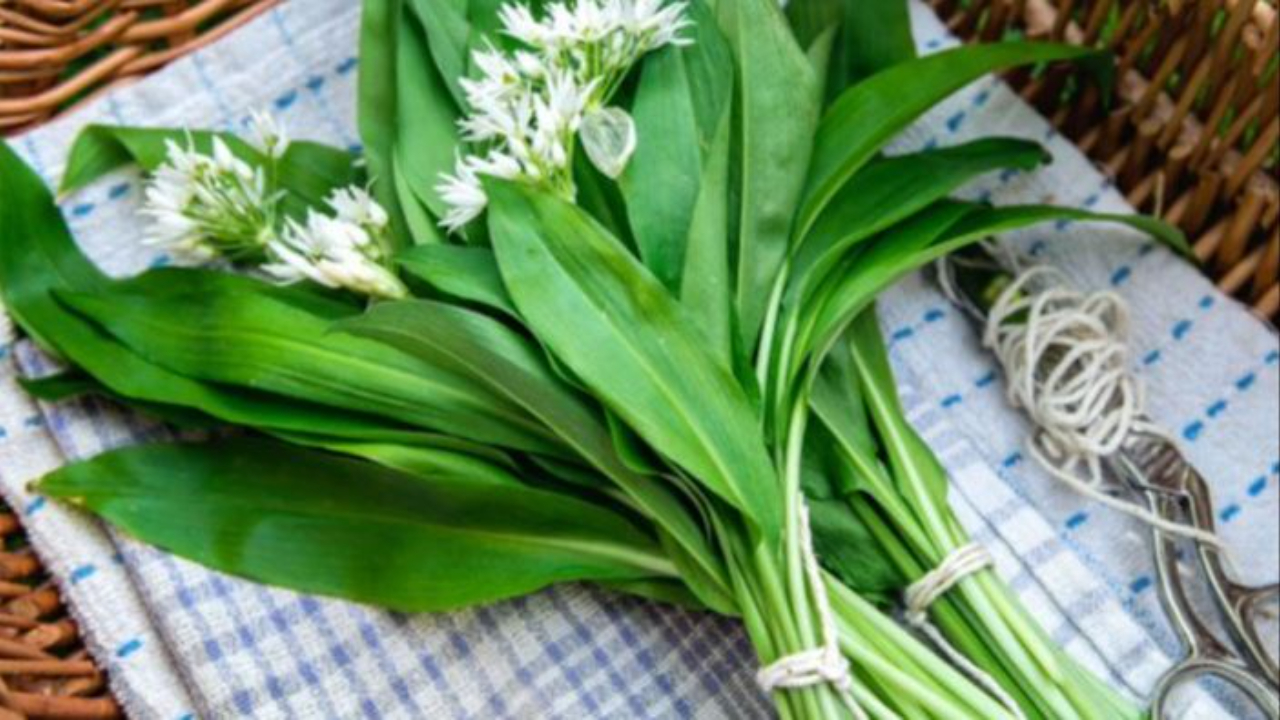
Something a little less common unless you’re a forager: wild garlic.
We’re just at the tail end of its season, but if you do come across it, it’s well worth picking up.
Like conventional garlic, it contains allicin, a compound with antibacterial, antifungal and antiviral properties.
It also supports cardiovascular health, may help regulate blood pressure, and provides vitamins A and C alongside minerals like calcium and iron.
If you are tempted by a spot of foraging, do make sure that you wash your bounty very thoroughly & please be mindful to leave plenty behind for the next forager & for next year’s harvest.
You can use wild garlic raw in salad, in pesto or blended into butter, or cooked as any other green leaf in soups, risottos, pasta sauces, etc. Add right at the end of cooking to maintain the gorgeous colour & pungency. You can even pickle or ferment the flower buds.
Now, let’s talk about something far more familiar.
Potatoes.
But specifically, new potatoes.
Early-season potatoes have a slightly different nutritional profile to the older ones we tend to rely on through the winter.
They’re less ‘floury’ as they contain higher levels of resistant starch, particularly when cooked and then cooled.
Resistant starch isn’t digested in the small intestine. Instead, it passes through to the large intestine, where it feeds our gut bacteria.
So not only does it support gut health, it can also help with blood sugar regulation.
Which means that something as simple as a cold potato salad isn’t just delicious, it’s genuinely beneficial.
And finally, one of my personal favourites - watercress.
If you’re looking for something nutrient-dense, this is hard to beat.
It provides magnesium, calcium and potassium: all supporting healthy blood pressure and vascular function, alongside a significant amount of vitamin C.
It’s also rich in antioxidants, including beta carotene, lutein and zeaxanthin, which support eye health, and isothiocyanates, which may play a role in protecting against certain cancers.
And on top of all that, it has a proper peppery flavour that actually makes your meals more interesting.
Serve it dressed with olive oil to optimise your body’s ability to absorb all those amazing nutrients.
So why am I sharing all of this?
Because when we strip things back, menopause nutrition does not need to be overwhelming or complicated.
Menopause nutrition is about consistently choosing foods that support your body - your hormones, your gut, your cardiovascular system, your bones - in a way that feels realistic and sustainable.
This is what science-backed menopause nutrition looks like when it’s done properly.
Practical. Grounded. Achievable.
And when you get these basics in place, everything else becomes easier: from energy levels to mood, from digestion to long-term wellbeing.
So next time you’re doing your shop, perhaps just pause for a moment and ask yourself:
What small change could I make here that would support me better?
Maybe it’s adding asparagus to your basket.
Maybe it’s swapping your usual lettuce for watercress.
Maybe it’s making a cold potato salad instead of reaching for something more processed.
Small shifts. Real impact.
A quick reminder before I go.
Alongside my friend Heather, I’m hosting the first of what I hope will be a series of menopause cafés tomorrow evening (28th) at 6pm at Vibe Café in Douglas.
This will be a private, non-judgemental space for conversation.
A space to share experiences, ask questions, and feel supported.
There’s a small £5 charge to cover the space and refreshments, and you’ll leave not just having had a chat, but with a clearer sense of where you might go next in terms of support.
If you’ve been feeling a bit stuck, a bit unsure, or simply aware that you could be supporting yourself better please come along.
Or if you can’t make it, drop me a message. We can start a conversation there.
Because you don’t have to figure this out on your own, and in my experience, when women stop trying to do exactly that, everything starts to change for the better.
Sign up to my newsletter
and get a Free Meal Plan
"Life is about balance and finding that balance starts with your nutrition"
We won't send spam. Unsubscribe at any time.
