
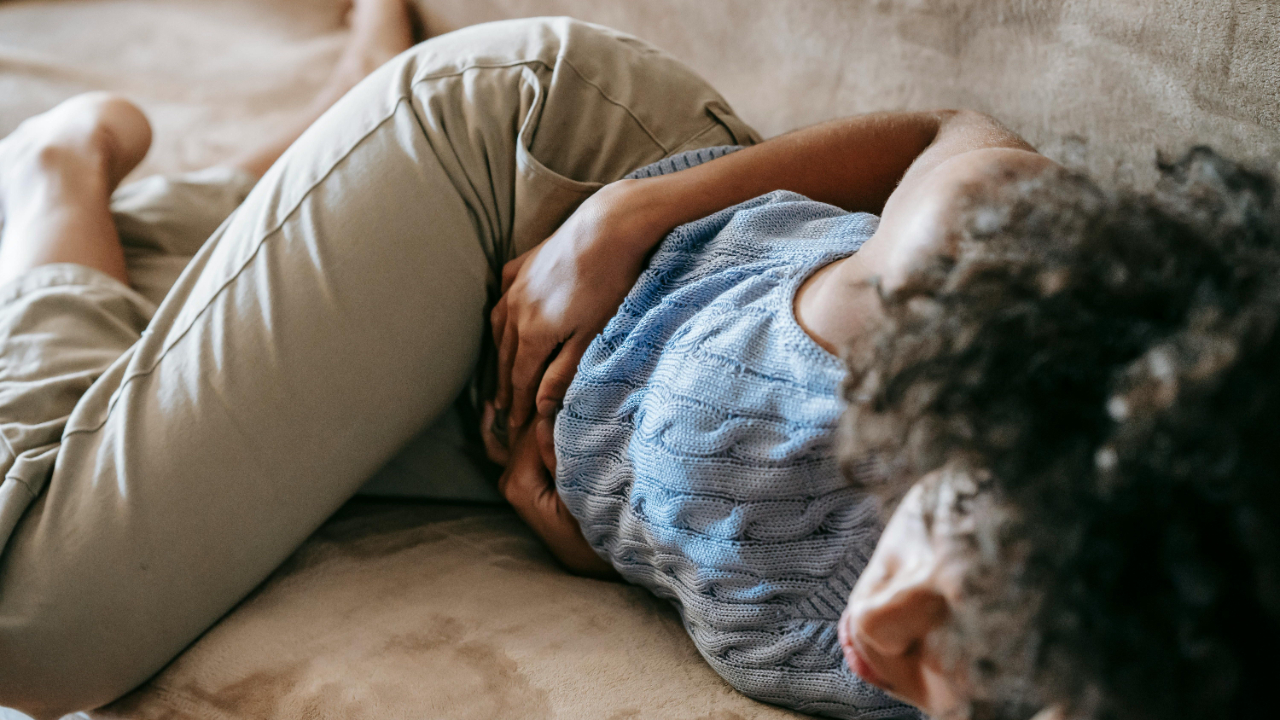
Painful periods are common. They are not 'normal'.
Apr 14, 2026There are certain things we’ve been told for so long that we stop questioning them.
One of those is this: painful periods are normal.
I’m going to say this very clearly, because it needs to be said more often…
Your periods should not be painful.
Yes, there may be some discomfort.
Yes, you might feel a bit off, a bit crampy, a bit inconvenienced for a day or two.
But being doubled over?
Missing work?
Cancelling plans?
Lying in bed with a hot water bottle, unable to function?
That is not normal.
It may be common: but it is not normal.
So what’s actually going on?
Pain associated with menstruation has a name: dysmenorrhoea.
For many women, it shows up as mild cramping for a day or two each month. Manageable, predictable, and not life-disrupting.
But for others, it’s a completely different experience.
We’re talking about severe pain, often alongside symptoms like:
- Nausea
- Vomiting
- Diarrhoea
- Headaches
- Dizziness
And for some women, that pain is so intense it stops them from living their normal lives.
That’s where we need to stop brushing it off.
There are two types of dysmenorrhoea:
Primary dysmenorrhoea
This is the more common type. It’s linked to natural chemicals in the body called prostaglandins.
These are produced in the lining of the uterus and are responsible for causing the uterus to contract so that the lining can be shed during your period.
We need prostaglandins. They’re doing an essential job.
But when levels are too high, those contractions become more intense.
And at the same time, pain sensitivity increases.
So what might otherwise be manageable becomes significantly more painful.
That’s why the first day or two of your period often feels worse. Prostaglandin levels are highest at the start, and then reduce as bleeding continues.
Secondary dysmenorrhoea
This is where pain is caused by an underlying condition.
Causes may include:
- Endometriosis (affecting an estimated 10% of women, often undiagnosed for years)
- Fibroids
- Adenomyosis
With this type, pain tends to worsen over time and may last longer than typical menstrual cramps.
And yet, far too often, women are still told:
“Just take painkillers.”
“It’s normal.”
“Get on with it.”
Let me be very clear…
If your period pain is stopping you from living your life, it deserves investigation.
Even if conditions like endometriosis are ruled out, that should not be the end of the conversation.
Even outside of pharmaceutical interventions, elevated prostaglandins, and the inflammation driving them, can still be addressed.
The inflammation connection
When we look at what drives excessive prostaglandin production, we often come back to something broader: systemic inflammation.
And this is where lifestyle starts to matter.
Not in a airy-fairy, nebulous way: but in a very real, physiological sense.
How does it break down?
- Stress
Chronic stress keeps cortisol elevated. When cortisol stays high, it promotes inflammation, and in turn, prostaglandin production.
So this isn’t just about “feeling stressed.”
It’s about understanding:
- What’s driving your stress
- How your body responds to it
- And what tools you have to reduce that load
- Diet
A diet high in ultra-processed foods, refined sugars, and poor-quality fats can increase inflammation.
On the flip side, there are foods that actively help to counter this.
Think:
- Omega-3 fats (oily fish, flax seeds, walnuts)
- A wide range of colourful fruit and vegetables (your antioxidants)
If you’ve heard me say “eat the rainbow” before, this is one of the reasons why.
- Movement
Regular movement is naturally anti-inflammatory.
Not just intense exercise, but consistent, appropriate movement across the month.
- Sleep
Poor sleep increases inflammation.
And it’s not just about the few days around your period. It’s about your overall sleep patterns across the month.
- Alcohol, smoking, and sugar
All of these can contribute to inflammation, and therefore potentially worsen symptoms.
- Magnesium
Magnesium plays a role as a natural muscle relaxant.
It also supports blood flow via supporting production of nitric oxide.
Foods like leafy greens, nuts, and seeds can be helpful here.
One note of caution: If you’re prone to diarrhoea during your period, be careful with magnesium supplements, as they can exacerbate that.
Practical support (in the moment)
If you are experiencing pain, there are tools that can help in the short term:
- Heat therapy (yes, the hot water bottle still has its place)
- TENS machines
But these should be supportive measures, not your only strategy.
Because if you are regularly needing them just to function, something deeper needs addressing.
And yes… fibre matters
I know I’ve spoken about fibre quite a bit recently, and I’m going to mention it again here, because it’s relevant.
There is evidence that women who eat higher fibre diets tend to have:
- Lower levels of inflammation
- Better hormone regulation
- Less menstrual pain
Part of this comes down to how fibre supports the clearance of hormones like oestrogen from the body.
So if you’re thinking, “Does it really make that much difference?”
In many cases, yes, it can.
The takeaway
Painful periods are common.
But they are not something you should simply accept.
If your symptoms are interfering with your ability to live your life:
- Push for answers
- Push for investigation
- And don’t allow yourself to be dismissed
At the same time, there is a lot within your control.
Practical, evidence-based changes to:
- Diet
- Stress
- Sleep
- Movement
can have a meaningful impact on inflammation - and in turn, on your symptoms.
If this resonates with you - or with someone you know - don’t sit on it.
Start by having the conversation:
- With your GP
- With someone who understands women’s health
- Or even by replying to this email if you’d like to talk it through
You don’t have to “just get on with it.”
And you certainly don’t have to navigate it on your own.
If you’d like to jump into making lifestyle changes - focussing on food, introducing movement &/or stress management, & be supported while you’re doing it, remember that I’m starting 3 weeks of online course Menomelt on April 19th.
It’s no exaggeration to say that it’s astonishing how much of a difference dietary change can make to how you feel day to day.
Full details here, or drop me a line for a chat.
Sign up to my newsletter
and get a Free Meal Plan
"Life is about balance and finding that balance starts with your nutrition"
We won't send spam. Unsubscribe at any time.
