
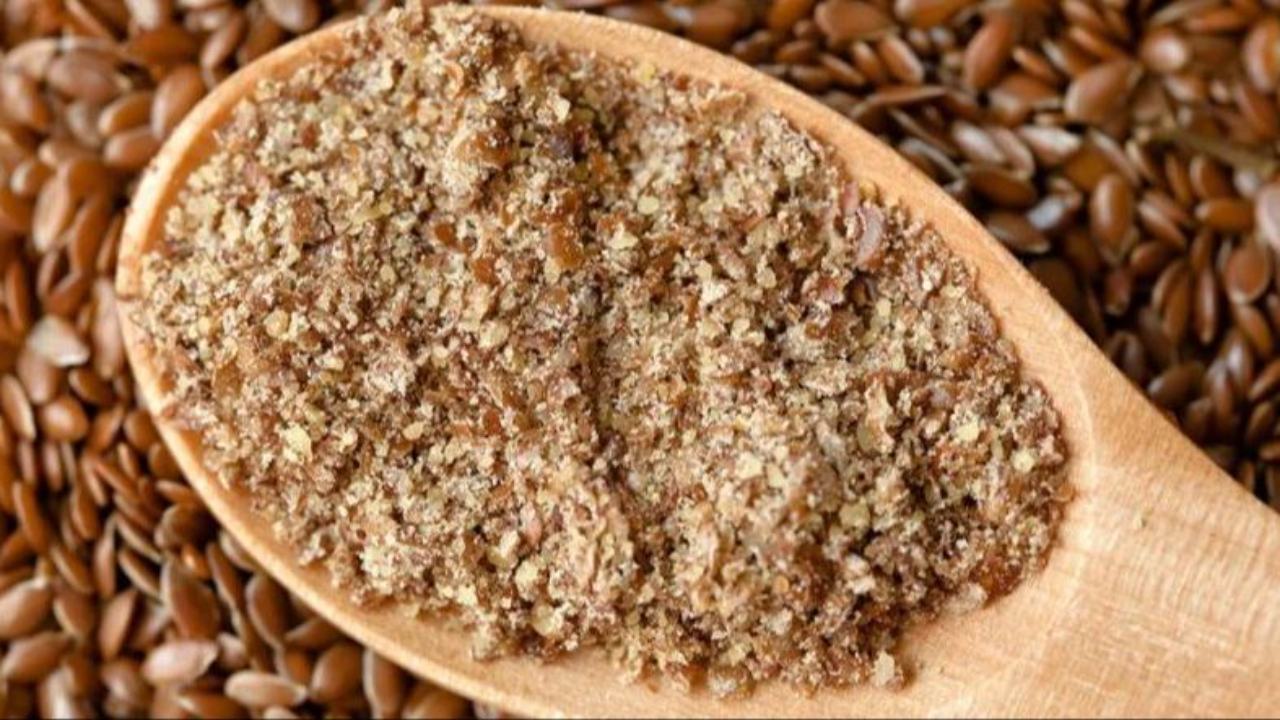
Could 2 tbsps flaxseeds help support mood in perimenopause?
May 18, 2026If you’ve spent any time following me, you’ll know that I am a big fan of flaxseeds.
They regularly crop up in food plans, action plans and general conversations around practical dietary shifts that can make a meaningful difference during menopause.
So it caught my attention over the weekend when I came across a newly published study looking specifically at one of flaxseed’s most interesting components: lignans.
These are naturally occurring phytoestrogens found in flaxseed, and this particular research looked at the potential benefits they may have for depressive symptoms during perimenopause.
Many of you will be all too familiar with the emotional and cognitive shifts that can accompany this phase of life.
Low mood.
Anxiety.
Poor sleep.
Memory lapses.
A sense of mental fog.
That general feeling of not quite feeling like yourself.
These symptoms can feel incredibly unsettling, particularly when they arrive unexpectedly or begin affecting your confidence, relationships or ability to cope with day-to-day life.
This study was relatively small, involving 64 participants, and it ran for just four weeks.
As with all research, those limitations matter.
We should always be cautious about drawing sweeping conclusions from one short-term trial.
That said, it was a randomised study, and importantly, the researchers also followed up much of their work in the laboratory to better understand the biological mechanisms behind what they observed.
What they found was encouraging.
By the end of the four-week period, the women in the intervention group showed significant reductions in depression scores compared to baseline.
There was also an increase in serum oestradiol levels.
The findings naturally raise questions around what exactly may be driving these effects.
One proposed explanation centred around increased activity of an enzyme called beta-glucuronidase.
This enzyme is present in the gut and plays a role in lignan metabolism. It also has an important function in oestrogen recycling.
The suggestion from the study is that the by-products created as lignans are metabolised may help moderate depressive symptoms by interacting with oestrogen receptors in the brain and influencing downstream signalling pathways.
The researchers also identified evidence suggesting neuroprotective effects.
There appeared to be improvements related to synaptic growth and adaptability, what is referred to as neuroplasticity, alongside reduced neuronal damage in the hippocampus.
The hippocampus is an area of the brain closely involved in memory, learning and emotional regulation.
All of this points to a fascinating and growing area of research around the relationship between plant compounds, gut metabolism, oestrogen activity and brain health during hormonal transition.
What I found particularly reassuring was that the dose of lignans used in the study, while delivered through supplementation, could very easily be achieved through food.
Around 20 grams of ground flaxseed, roughly two tablespoons, would provide more than the amount used in this research.
That matters. Because while supplements may have their place, I will always lean towards food-first strategies wherever possible.
They tend to offer broader nutritional benefit, greater sustainability and are usually far more accessible.
And flaxseeds have a lot going for them beyond this latest study.
They are an excellent source of fibre, supporting gut motility and helping to nourish a healthy gut microbiome.
They provide anti-inflammatory omega-3 fats.
They offer those phytoestrogenic lignans which may have beneficial effects across multiple systems in the body.
They are also inexpensive, easy to store & simple to add to meals.
Stir them into porridge.
Add them to yoghurt.
Blend them into smoothies.
Sprinkle them over soups or salads.
A very small habit, with potentially meaningful benefits.
Now, to be absolutely clear, I am not suggesting that flaxseed is a substitute for medical care.
If you are experiencing persistent low mood, depression or anxiety, it is essential to speak with your GP or healthcare practitioner.
There may be several appropriate avenues for support, whether that involves hormone replacement therapy, antidepressant medication, psychological support or other interventions.
Dietary flaxseed may be a helpful adjunct. It is not a replacement.
What this study does offer is another evidence-based reminder that the food we eat can influence far more than just our waistline.
It can affect our gut health.
Our inflammation levels.
Our hormonal environment.
Potentially even our mood and brain resilience.
I reported last week on the results from the recent round of MenoMelt. Amongst other changes, the participants described feeling calmer, less anxious, steadier & better able to cope with stress.
We cannot attribute those outcomes solely to flaxseeds, of course.
Lifestyle change is always multifactorial.
But flaxseed is often one of the very first practical additions we make, precisely because it is such an easy, evidence-backed win.
Sometimes the most effective changes are not dramatic. They are simple, consistent and quietly powerful.
If adding two tablespoons of ground flaxseed to your day feels manageable, it may well be a worthwhile starting point.
And if this resonates with you, if low mood, anxiety or simply not feeling quite yourself has become part of your experience, and you would like to explore how this small piece fits into a broader lifestyle approach, do get in touch.
There is rarely one magic answer.
But there are often several meaningful pieces of the puzzle.
Sign up to my newsletter
and get a Free Meal Plan
"Life is about balance and finding that balance starts with your nutrition"
We won't send spam. Unsubscribe at any time.
